Index
- What is a hair massage and why has it been forgotten?
- Proven benefits of hair massage
- Types of hair massage: techniques and effects
- Circular with fingertips
- Digitopuncture on temples
- Pressure with knuckles
- Wooden or bamboo comb
- Massage with essential oils
- How is a professional hair massage performed
- Role of hair massage in advanced aesthetic treatments
- Hair microneedling
- Exosome therapy
- Ozone therapy and LED therapy
- How often should I have a hair massage?
- Relationship between hair massage and emotional health
- Symptoms that indicate you need a hair massage
- Physical symptoms
- Emotional symptoms
- Conclusion: a self-care ritual that starts at the root
- Frequently asked questions
What is a hair massage and why has it been forgotten?
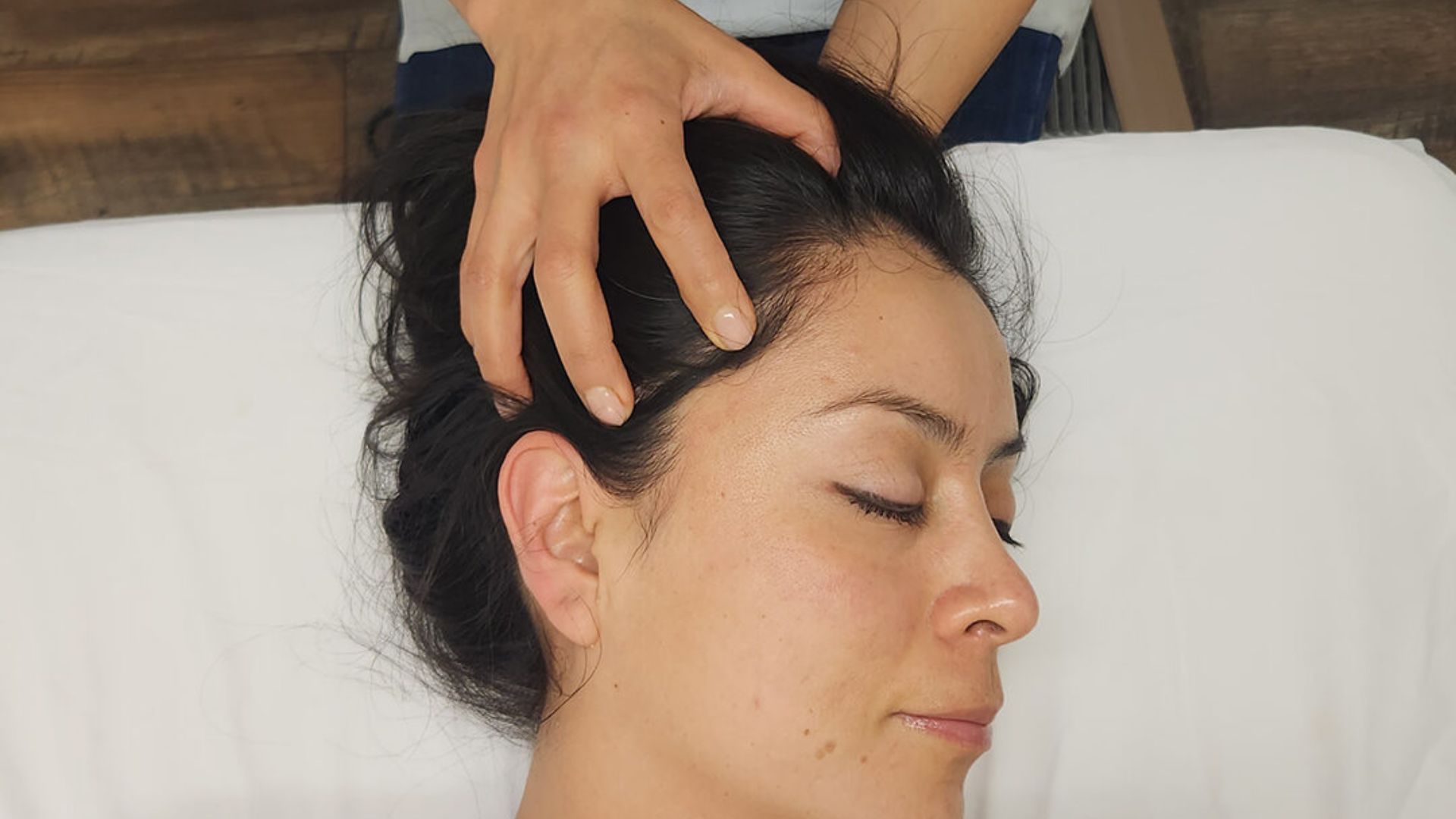
A hair massage is a manual technique focused on the stimulation of the scalp through gentle pressure, circular movements and acupressure. Although it has been part of ancient traditions such as Ayurveda, it has been minimized in modern aesthetics, where more invasive cosmetic treatments are prioritized. However, this “forgotten ritual” is making a comeback in holistic spas such as 4 Elements Spa, where it is combined with cellular regeneration technologies and holistic therapies.
In an environment saturated by chemicals, heat tools and environmental pollution, the scalp suffers from accumulated stresses that affect both hair quality and emotional health. This is where hair massage, with its holistic and restorative approach, becomes a fundamental tool.
Proven benefits of hair massage
Several studies have shown that hair massage goes far beyond a simple feeling of relaxation. Research in the International Journal of Trichology revealed that daily 4-minute sessions for 24 weeks produced a visible increase in hair thickness. This improvement is attributed to increased oxygenation and nourishment of the hair follicles due to the activation of peripheral circulation.
Other benefits include:
-
- Reduction of hair loss due to stress or hormonal imbalance.
- Reduced scalp inflammation, ideal for cases of seborrheic dermatitis.
- Increased collagen and elastin production.
- Reduction of excessive sebum or dryness.
- Regulation of skin pH.
In addition, hair massage also improves brain oxygenation, which has neurological and emotional benefits such as less anxiety, better memory and deep sleep.
Types of hair massage: techniques and effects
Hair massage can be adapted according to the needs of the scalp. Here are some common techniques applied by expert therapists:
Circular with fingertips
-
- Main benefit: Activates peripheral circulation.
- Indicated for: Weak hair, slow growth.
Digitopuncture on temples
-
- Main benefit: Relieves tension, improves irrigation.
- Indicated for: Stress, headache, insomnia.
Knuckle pressure
-
- Principal benefit: Relieves muscle contractures.
- Indicated for: Bruxism, cervical stiffness.
Wooden or bamboo comb
-
- Main benefit: Redistributes natural sebum, prevents frizz.
- Indicated for: Dry, brittle hair.
Essential oil massage
-
- Main benefit: Nourishes, purifies and balances.
- Indicated for: Dandruff, dermatitis, seasonal hair loss.
These techniques can be combined in sessions of 20 to 45 minutes depending on the personalized protocol performed at the spa. At 4 Elements Spa, they are adapted according to the client’s condition, the aesthetic objectives and the complementary treatments that are integrated.
How a professional hair massage is performed
A professional hair massage session goes far beyond “stroking the scalp”. It begins with a visual and tactile analysis of the scalp to identify areas of tension, inflammation or sebaceous imbalance. From there, the therapist can apply active ingredients such as fortifying serums, essential oils of lavender, rosemary or peppermint, or oxygenating products according to the protocol.
Phases of a complete session:
-
- Cleansing and diagnosis: Review of the scalp.
- Application of active ingredients: Nourishing, repairing or soothing.
- Deep manual stimulation: Combined technique of pressure, traction and rubbing.
- Digitopuncture: On key points of the cranial nervous system.
- Sealing and resting: The product is left to act for 10 to 20 minutes.
This process can be combined with other regenerative therapies such as microneedling, enhancing its effect from the root.
Role of hair massage in advanced aesthetic treatments
Nowadays, hair massage is part of advanced hair protocols. It is used as a bridge between manual stimulation and biotechnological absorption, preparing the scalp for treatments such as:
Scalp microneedling
Massage improves the penetration of active ingredients after the procedure. Here you can see how scalp microneedling stimulates hair growth from the root.
Exosome therapy
Particles that regenerate cells and tissues. A previous massage optimizes their distribution. Learn more in this article about microneedling with exosomes and its effect on skin and scalp.
Ozone therapy and LED therapy
The massage activates strategic zones for better photobiomodulation.
These combinations make it possible to treat not only the hair surface, but also to revitalize the skin from deeper layers.
How often should I have a hair massage?
The ideal frequency varies according to your objective:
| Objective | Recommended frequency |
| Stimulate hair growth | 2 to 3 times a week |
| Maintain hair health | 1 time a week |
| Complement aesthetic treatments | According to personalized protocol |
| Relieve stress and tension | 1 time every 3 to 5 days |
| Control dandruff or excessive sebum | 2 times a week |
Table 1. Recommended objectives and frequency
A hair therapist should assess your scalp to recommend the ideal frequency, combining the right technique with the right products.
Relationship between hair massage and emotional health
The scalp is a very sensitive area with direct connections to the central nervous system. When properly stimulated, it activates the parasympathetic system, which induces the body to a state of relaxation, rest and regeneration.
Emotional benefits:
-
- Reduction of stress and anxiety.
- Improved sleep quality.
- Relief of tension headaches.
- Decreased heart rate and blood pressure.
- Feeling of calm and fullness.
In this sense, hair massage can also be considered an emotional wellness therapy. Many people leave a session feeling “lighter”, clear and emotionally balanced.
Symptoms that indicate you need a hair massage
Your body sends signals when something is not right. Pay attention to these symptoms, as they could indicate that your scalp needs stimulation, detoxification or simply relaxation:
Physical symptoms
-
- Thinning or suddenly shedding hair.
- Itching or burning with no apparent cause.
- Oily or flaky scalp.
- Lack of volume, shine or texture in the hair.
- Pain or tension to the touch in the head or nape of the neck.
Emotional symptoms
-
- Chronic mental fatigue.
- Irritability or feeling of “burdened mind”.
- Insomnia or difficulty relaxing.
- Frequent headaches.
Hair massage acts as a multifunctional therapy that can address all of these symptoms simultaneously.
Conclusion: a self-care ritual that starts at the root
Hair massage is much more than a relaxing technique: it is a therapeutic ritual that stimulates circulation, strengthens follicles and promotes overall wellness. It goes beyond aesthetic care, touching on physical, emotional and energetic aspects by relieving accumulated tensions and improving scalp health from the root.
In a context where stress, poor diet and excessive use of chemicals affect hair quality, this type of massage emerges as a preventive and restorative solution. To ignore the health of the scalp is to ignore the foundation of your hair and, therefore, your image and confidence. Incorporating it into your wellness routine offers you a needed break, a space for personal reconnection and a tangible improvement in hair texture, volume and vitality. In centers such as 4 Elements Spa, it is integrated into personalized protocols with regenerative technology for visible and lasting results.
Frequently Asked Questions
- Can hair massage help if I have hereditary or genetic alopecia? Yes, although it is not a cure, it can improve the condition of the scalp and slow the progression of alopecia. By increasing blood flow to the follicles, it creates an environment more conducive to preserving existing hair. In addition, when combined with therapies such as microneedling or the application of medical actives, it can significantly enhance your results.
- Can I combine hair massage with pharmacological treatments such as minoxidil or finasteride? Definitely. In fact, it is recommended. Massage improves the absorption of topical products such as minoxidil, allowing greater penetration into the follicles. In combination with oral treatments, it favors the capillary environment so that the results are longer lasting and less prone to local side effects such as irritation.
- Are there any risks or contraindications in receiving a capillary massage? In general, it is a safe technique. However, there may be contraindications in specific cases such as active scalp infections, recent head surgeries, presence of cysts or tumors, or certain serious dermatological disorders. A previous evaluation with a hair therapist or dermatologist is always recommended.
- How long does it take to notice the effect of hair massages on the hair? Immediate benefits such as relaxation, less tension and a feeling of lightness are perceived from the first session. However, changes in hair health are usually noticed after several weeks, especially if complemented with a proper hair care routine and good nutrition. Generally, between 4 and 8 continuous weeks already show visible improvements in volume, shine and hair loss.
- Can hair massages also be useful for children or adolescents? Yes, especially in stages where there are hormonal changes, school stress or incorrect hygiene habits. In children, gentle massages help relax the nervous system and improve scalp health, while in adolescents they can help control excess sebum, dandruff and prevent early hair loss caused by stress. In these cases, a gentle, age-appropriate technique should be used.