
Table of Contents
- Introduction
- What are spider veins and why do they appear?
- Spider veins: how creams work and how far they can help
- What can creams actually do?
- The main problem with topical treatments
- When a cream can play a reasonable role
- Spider veins with Laser Spectrum: why the Nd:YAG acts from inside the vessel
- What does it mean that the Nd:YAG acts from inside the vessel?
- Real differences between treating spider veins with creams and with laser
- The most important practical difference
- When creams can be useful and when they fall short
- Creams can serve as support when
- Creams fall short when
- Benefits of Laser Spectrum in the treatment of spider veins
- Most notable benefits
- What to expect in a laser session and during recovery
- During the session
- After the session
- Typical aftercare
- How to choose the best treatment for spider veins according to your case
- Conclusion
- Frequently asked questions
Introduction
Spider veins are one of the most common aesthetic concerns among people who want more even-looking skin on their legs, cheeks, nose, or certain areas of the face. Although they tend to be small, their visual impact can be much greater than it appears. The mere appearance of reddish, purple, or bluish lines in visible areas is enough to prompt many people to start looking for immediate solutions. In that search, the two most common routes are usually topical treatments, such as creams or gels, and technological options, such as laser. However, not all treatments work the same way — and that is the central point that often goes unnoticed. A cream may provide a sense of relief, temporarily improve skin texture, or visually reduce some irritation, but that does not mean it has eliminated the vascular structure that gives rise to the problem. In contrast, a treatment using laser technology designed for vascular lesions, such as the Nd:YAG from Spectrum, targets the visible blood vessel directly and uses selective energy to treat it from within.
Understanding this difference is essential for making an informed decision. It is not merely a matter of choosing between “something simpler” or “something more advanced,” but of understanding what each option can actually do. If the goal is to slightly conceal the appearance, a cream may play a complementary role. If the goal is to treat the origin of already visible spider veins, the therapeutic logic changes entirely. This article develops in detail the difference between treating spider veins with creams and treating them with Laser Spectrum technology, with special emphasis on why the Nd:YAG acts from inside the blood vessel and why that makes it a more precise alternative for those seeking noticeable and better-targeted results.
What are spider veins and why do they appear?
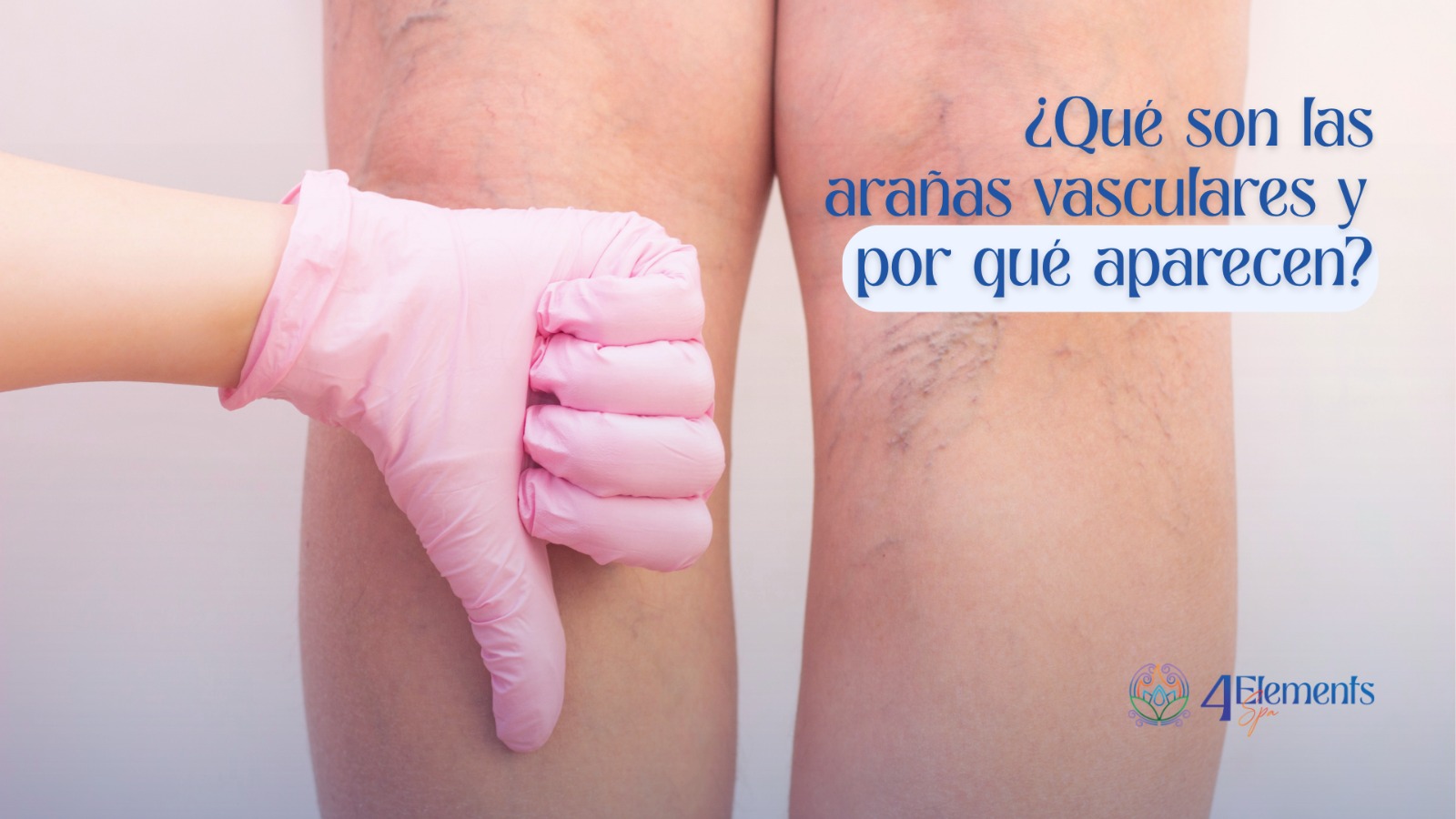
Spider veins, also known as telangiectasias, are small dilated blood vessels that become visible through the skin. They can appear as fine lines, reddish branching patterns, or violet streaks that form web-like patterns. They most commonly appear on the legs, nose, cheeks, and around certain facial areas where the skin is thinner or where there is greater capillary fragility.
Although from a medical standpoint they do not always represent an urgent concern, they do reveal a structural change in the microvasculature. That is, they are not simply a color stain on the surface of the skin — they are vessels that have dilated, become visible, and remain there.
Several factors favor their appearance:
| Factor | How it influences the appearance of spider veins |
|---|---|
| Genetics | Increases predisposition to vascular fragility |
| Age | Skin and vessels lose support over time |
| Hormonal changes | Can modify vascular tone and circulation |
| Sun exposure | Weakens skin structures and favors visible vessels on the face |
| Prolonged standing | Increases venous pressure, especially in the legs |
| Pregnancy | Increases blood volume and vascular pressure |
| Sedentary lifestyle | Can worsen circulation |
| Overweight | Increases the load on the venous system |
Table 1.
It is also important to distinguish them from varicose veins. Spider veins tend to be finer, more superficial, and predominantly aesthetic in nature. Varicose veins, on the other hand, tend to be deeper, more prominent, and in many cases accompanied by functional discomfort. Even so, both problems share a vascular basis, which means that the choice of treatment should not focus solely on what is visible, but on where the problem lies and how to treat it effectively.
Spider veins: how creams work and how far they can help
When a person first notices spider veins, it is very common to turn to creams, gels, or serums that promise to “fade little veins,” “improve circulation,” or “even out skin tone.” This happens because creams seem like an accessible, simple, and non-invasive option. They are also typically sold with ingredients that inspire confidence, such as vitamin K, arnica, horse chestnut, caffeine, botanical extracts, or compounds with a soothing effect.
But the critical point is not whether the cream has good ingredients — it is the biological limit of what it can achieve.
What can creams actually do?
Creams can provide some cosmetic or complementary benefits:
- Temporarily improve the appearance of the skin
- Reduce the feeling of heaviness in certain areas
- Provide hydration and skin comfort
- Reduce mild inflammation or superficial irritation
- Help the skin look more even on a transient basis
This means they can be useful as a support measure, especially when the person is looking for general care of the area or support alongside other healthy habits. However, their action is predominantly superficial. They do not typically eliminate the dilated vessel that is already visible beneath the skin.
The main problem with topical treatments
Spider veins are not just a color change on the surface. They are visible blood vessels that require action directed at the vascular structure. A cream does not “enter” the vessel or produce the selective collapse of that small dilated vein or capillary. In most cases, it only partially improves the surrounding skin environment.
This is why one of the most common mistakes is expecting a topical product to completely eliminate an established vascular alteration. It may help the area look better — yes. It may support skin care — also yes. But it does not usually resolve the underlying cause.
When a cream can play a reasonable role
- Mild redness without a marked vascular lesion: Can help as cosmetic support
- Sensitive skin prone to irritation: Can soothe and protect the skin barrier
- Maintenance following professional treatments: Can complement the routine
- Already visible and defined spider veins: Its capacity is limited
Spider veins with Laser Spectrum: why the Nd:YAG acts from inside the vessel
This is where the fundamental difference between a topical treatment and a well-targeted technological treatment lies. The Laser Spectrum with Nd:YAG technology does not attempt to “mask” the vascular lesion — it seeks to treat it selectively.
The principle behind this treatment is selective photothermolysis. In simple terms, this means that the laser’s energy is directed toward a specific target: the hemoglobin present in the blood vessel. That energy is absorbed, converted into controlled heat, and causes selective thermal damage to the vessel’s structure, promoting its collapse. Afterward, the body itself takes care of gradually reabsorbing it.
What does it mean that the Nd:YAG acts from inside the vessel?
It means it does not work solely on the skin’s surface. Its target is the vascular structure responsible for the visibility of the spider vein. Rather than remaining in the outermost layer, it penetrates to an adequate depth to reach vessels that a cream cannot treat.
This approach entirely changes the expected outcome:
- The laser’s energy penetrates the skin
- The hemoglobin in the vessel absorbs that energy
- Selective heat is generated within the vessel
- The treated vessel collapses
- The body eliminates it naturally over time
That is why the Nd:YAG from Spectrum is considered a more logical option when spider veins are already defined and a real change is sought — not just a temporary cosmetic improvement.
Real differences between treating spider veins with creams and with laser
Comparing both approaches helps eliminate false expectations. Although both can have a place within aesthetic care, they do not do the same thing, do not promise the same results, and should not be evaluated by the same standard.
| Criteria | Creams | Laser Spectrum with Nd:YAG |
|---|---|---|
| Type of action | Superficial | Selective and vascular |
| Scope | Limited to skin and external appearance | Targeted at the visible vessel |
| Objective | Conceal, soothe, improve appearance | Treat the visible vascular cause |
| Results | Subtle and variable | Clearer and structurally targeted |
| Duration of use | Continuous, prolonged | Scheduled sessions |
| Product dependency | High | Less after the protocol |
| Effect on the vessel | Generally does not eliminate it | Seeks to close it and promote reabsorption |
Table 2.
The most important practical difference
The practical difference is simple: the cream can accompany; the laser can intervene.
When a person has been using products for months and notices that spider veins are still there, the problem is rarely a lack of consistency. It is more likely that the chosen method does not have the physical or biological capacity to modify the blood vessel responsible for the lesion.
When creams can be useful and when they fall short
This is not about demonizing creams. There are scenarios in which they can form part of a reasonable care strategy — for example, when the person wants to keep the skin hydrated, reduce the feeling of tired legs, or support habits that favor circulation.
Creams can serve as support when:
- There is mild capillary fragility without very marked lesions
- The goal is to improve skin texture or comfort
- They are part of a preventive routine
- They are used alongside lifestyle changes such as exercise, compression, or sun protection
Creams fall short when:
- Spider veins are already clearly visible
- Persistent reddish or violet branching patterns are present
- Elimination is sought, not just concealment
- Multiple products have already been tried without significant results
- The alteration is found in vessels that require selective treatment
In these cases, insisting solely on topical products typically results in frustration, accumulated expense, and wasted time. The reason is that a vascular problem is being addressed with a tool designed primarily for the skin environment.
Benefits of Laser Spectrum in the treatment of spider veins
The advantage of Laser Spectrum lies not only in being advanced technology, but in how it uses that technology to treat a vascular lesion more specifically.
Most notable benefits:
- Acts on the hemoglobin of the vessel
- Allows for more precise intervention
- Can treat visible lesions on the face and body, depending on evaluation
- Reduces the need to rely on daily products
- Focuses on the origin of the visible alteration
- Promotes more even skin appearance as the treated vessel is reabsorbed
In addition, the Nd:YAG is particularly valued for its ability to work at greater depth than other more superficial alternatives. This is relevant when spider veins are not located solely in the outermost layer, or when a more direct action on the vascular structure is sought.
Another important point is the safety of the treatment across different skin phototypes, always under professional evaluation and protocol.
What to expect in a laser session and during recovery
One of the most common questions is how the treatment feels and what happens afterward. Although each case depends on the size, depth, and location of the spider veins, the protocol is typically oriented toward treating the lesion in a localized manner.
During the session
The specialist evaluates the area, identifies the vascular pattern, and adjusts the equipment’s parameters based on the characteristics of the skin and the vessel. During the pulse, some people describe a brief sensation of heat or small snapping feelings. The intensity varies, but is generally tolerable.
After the session
Temporary responses may include:
- Mild redness
- Momentary sensation of heat
- Transient darkening of the treated vessel
- Light, localized swelling
These responses are part of the expected process in many cases, as the vessel has been treated and the body will begin to progressively eliminate it.
Typical aftercare:
- Avoid direct sun exposure: Reduces the risk of irritation or pigmentation
- Use sunscreen: Protects the treated area
- Follow the specialist’s instructions: Optimizes results
- Avoid excessive heat immediately after: Reduces additional irritation
- Do not manipulate the area: Promotes proper recovery
Results are not always fully visible on the same day. Since the body gradually reabsorbs the treated vessel, improvement is typically appreciated progressively.
How to choose the best treatment for spider veins according to your case
The right choice depends on the objective. That is the central question. It is not enough to ask “what is cheaper” or “what hurts less,” but rather “what do I really need based on what I have.”
If your goal is:
| Goal | Option that makes most sense |
|---|---|
| General cosmetic care | Creams as a complement |
| Subjective relief or skin comfort | Support creams |
| Treating already established visible vessels | Laser Spectrum with professional evaluation |
| Addressing the origin of the vascular lesion | Laser with selective action |
| Reducing dependence on daily products | Laser technology |
Table 3.
Other factors worth considering:
- Age of the spider veins
- Area of the body affected
- Skin type
- Degree of visibility
- History of previous treatments
- Patient’s realistic expectations
Those who seek a definitive solution with a cream are often disappointed. Those who understand that spider veins are visible vascular structures requiring targeted treatment tend to make more accurate decisions.
Conclusion
Spider veins may seem like an exclusively superficial problem, but they actually respond to a vascular alteration that cannot always be resolved from the skin’s surface. That is the key difference between using creams and opting for laser technology. Creams have a limited but useful complementary role: they hydrate, soothe, mildly improve the appearance of the skin, and can be part of a preventive or maintenance routine. However, when spider veins are already visible and defined, their reach is usually insufficient because they do not eliminate the responsible vessel.
The Laser Spectrum with Nd:YAG, in contrast, stands out because it acts from inside the blood vessel. Its energy is directed at the hemoglobin, generates selective heat, and promotes the collapse of the treated vascular structure so that the body can reabsorb it. In other words, it does not merely attempt to improve how the skin looks — it works on the vascular lesion itself. For this reason, when comparing treatments for spider veins, the right question is not just which seems more comfortable at the outset, but which has the real capacity to treat the origin of the problem. When the goal is to achieve visible, precise, and better-targeted improvement, laser technology represents a far more solid alternative than topical treatments alone.
Frequently Asked Questions
1. Do creams completely eliminate spider veins? In most cases, no. Creams can help slightly improve the appearance of the skin, reduce mild redness, or provide a sense of relief, but their reach is limited when it comes to already visible vascular structures. This is because they do not act directly on the dilated blood vessel, but rather on the skin surface. Therefore, they can function as a complement or preventive measure, but not as a definitive solution when spider veins are already established.
2. Why is the Nd:YAG different for treating spider veins? The Nd:YAG is different because its mechanism of action is specifically designed to target the hemoglobin inside the blood vessel. Unlike topical treatments, this type of laser penetrates the skin and generates a controlled thermal effect within the vessel, allowing it to collapse selectively. This ability to act from the inside is what makes it a more precise option for treating visible spider veins, since it not only improves the appearance but intervenes directly at the cause.
3. Can spider veins appear on both legs and face? Yes, they can appear in both areas, although the reasons tend to vary. On the legs, they are more related to venous pressure, prolonged standing, or circulatory factors. On the face, they are typically linked to capillary fragility, sun exposure, or skin changes over time. Despite these differences, in both cases we are dealing with visible vessels, which means the treatment approach must consider the depth and characteristics of each area.
4. Does laser completely replace all topical care? Not necessarily. Although laser can treat spider veins more directly, topical care still plays an important role in skin maintenance. A proper routine can help protect the skin barrier, prevent irritation, and complement the results obtained with technology. In this sense, laser and topical care are not in competition — they can be integrated within a more comprehensive approach.
5. Who should evaluate which treatment is most appropriate? The choice of the ideal treatment should be based on a professional evaluation. Each case can vary depending on the type of vessel, its depth, the area of the body, skin tone, and the patient’s expectations. A specialist can determine whether spider veins require a more superficial approach or whether a treatment such as laser — which acts directly on the vascular structure — is necessary. This assessment is key to avoiding ineffective treatments and guiding the decision toward results that are truly aligned with what the patient is seeking.