
Index
- Introduction: The vitamin C revolution in facial care
- Why is vitamin C for the skin so highly valued in dermatology?
- Dermatological benefits of vitamin C
- Types of vitamin C in cosmetics
- Vitamin C serum: Concentration, speed, and effectiveness
- Why choose a vitamin C serum?
- How to apply a serum correctly
- Vitamin C cream: Ideal for skin seeking comfort
- Benefits of vitamin C creams
- Who is cream best for?
- Tips for maximizing its effectiveness
- Vitamin C facial treatments: Professional rejuvenation
- Types of vitamin C treatments
- Key advantages
- How to choose the best form of vitamin C for your skin type
- Comparison table: serum vs. cream vs. facial
- Common mistakes when using vitamin C for the skin
- Using oxidized vitamin C
- Applying to damp skin
- Using very high concentrations without adaptation
- Not using sunscreen
- Mixing it with incompatible ingredients
- Safe and dangerous combinations with other active ingredients
- Safe combinations
- Combinations to avoid
- Practical advice
- Conclusion
- Frequently asked questions
Introduction: The vitamin C revolution in facial care
Over the last decade, vitamin C for the skin has gone from being an optional ingredient to an essential one in any facial care routine. Its ability to brighten, protect, and reverse the signs of aging has led thousands of brands to include this active ingredient in different forms: serums, creams, masks, and professional treatments.
But with so many options, choosing the right format can be confusing. Is it better to use a serum for its potency? A cream if you have sensitive skin? Or should you consider a professional vitamin C facial treatment?
In this comprehensive guide, we explain the differences between each format, their benefits, risks, and which option is best for you.
Why is vitamin C for the skin so highly valued in dermatology?
Vitamin C (ascorbic acid) is a water-soluble antioxidant that plays a fundamental role in collagen synthesis, neutralizing free radicals, and reducing pigmentation caused by the sun or aging.
Dermatological benefits of vitamin C:
-
- Stimulates collagen production, combating fine lines and sagging skin.
- Reduces dark spots and evens out skin tone.
- Protects against sun damage (as a complement to sunscreen).
- Improves skin texture, making it smoother and more luminous.
- Helps control the effects of oxidative stress and pollution.
Types of vitamin C in cosmetics:
| Derivative | Features | Ideal for |
| Ascorbic acid | More powerful but less stable | Normal or oily skin |
| Sodium ascorbyl phosphate | Stable, gentle, non-irritating | Sensitive or dry skin |
| Ethylated ascorbic acid | High penetration and duration | Mature skin |
| Ascorbyl glucoside | Long-lasting effectiveness, less irritating | All skin types |
Table 1. Types of vitamin C.
Vitamin C Serum: Concentration, speed, and effectiveness
The serum is a highly concentrated formula designed for rapid and deep absorption. It is considered the most effective format for those who want to see visible results in a short time, such as improving blemishes, reducing fine lines, and enhancing the overall radiance of the face.
Why choose a vitamin C serum?
-
- They contain between 10% and 20% pure vitamin C.
- They absorb deeply into the skin layers.
- They are ideal for use in the morning, before sunscreen.
- They help prevent and reverse signs of photoaging.
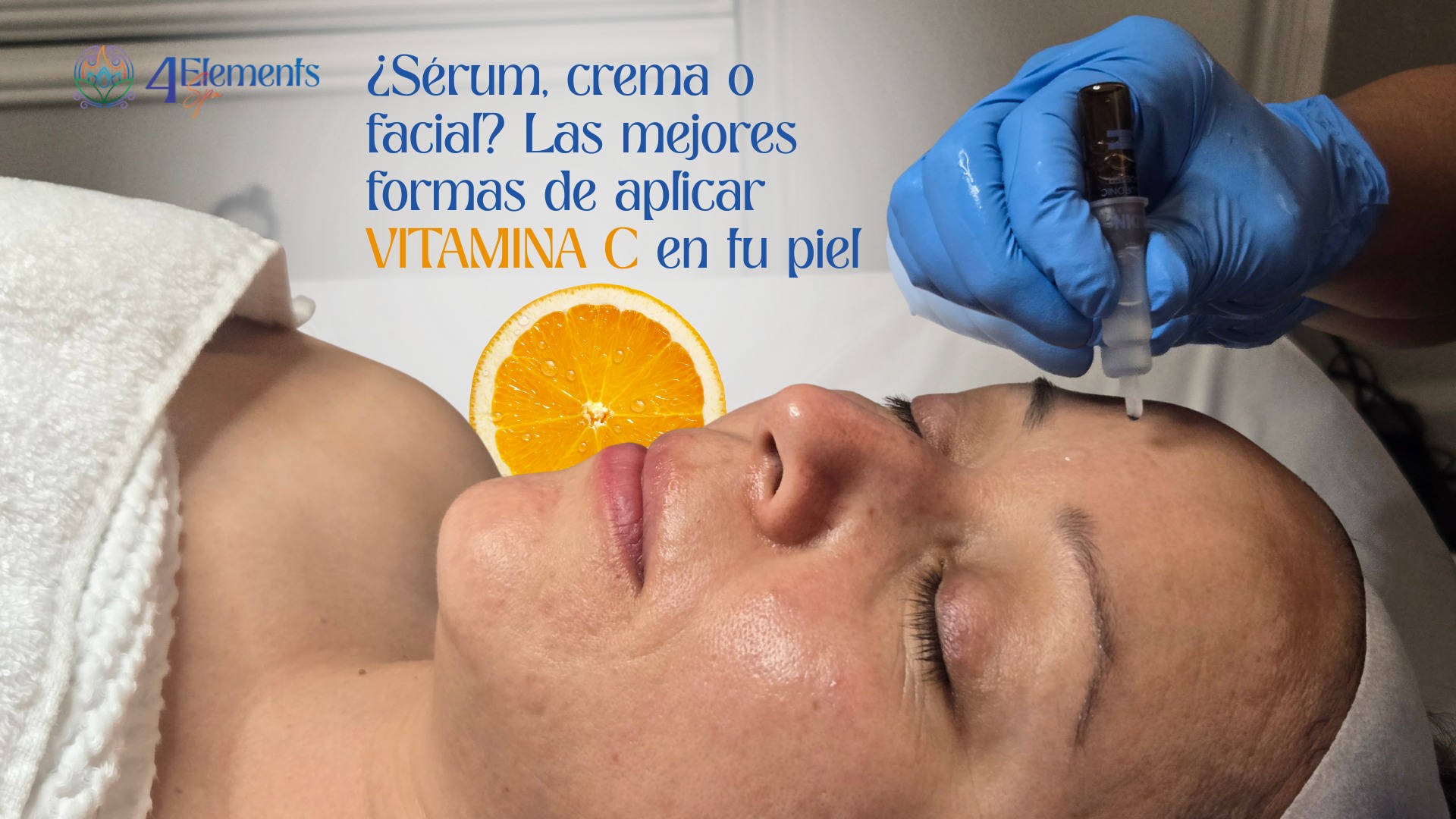
How to apply serum correctly:
- Wash your face with a gentle cleanser.
- Dry your skin completely.
- Apply 3 to 5 drops of serum to your face and neck.
- Gently massage until completely absorbed.
- Apply moisturizer and then sunscreen.
This type of product is highly compatible with anti-aging routines. You can also improve its effectiveness by applying it after a deep facial cleansing. As explained in this article on facial detox and its impact on other treatments, removing impurities and dead cells allows active ingredients such as vitamin C to penetrate better and work more effectively.
Vitamin C cream: Ideal for skin seeking comfort
Vitamin C cream offers a gentler and more complete way to care for your skin, especially if you are also looking for hydration, nourishment, and comfort in a single product.
Benefits of vitamin C creams:
-
- Deeply hydrate thanks to their emollient ingredients
- Provide a gradual release of the antioxidant active ingredient
- Reduce skin sensitivity compared to serum
- Can be combined with other ingredients (such as hyaluronic acid, ceramides, or niacinamide)
Who is cream best for?
-
- Dry or sensitive skin
- People who are new to using vitamin C
- Those looking for an all-in-one product (treatment + hydration)
Tips to maximize its effectiveness:
-
- Use it after serum at night if you want an intensive routine
- Look for formulas with opaque, airtight packaging to prevent oxidation of the active ingredient
- Apply with gentle upward strokes to the face and neck
Remember that the effectiveness of a cream depends not only on the percentage of vitamin C, but also on the stability of the compound. It is also important not to combine it with incompatible active ingredients. This guide to the myths and truths about hyaluronic acid addresses similar issues regarding the interaction between ingredients and how they affect the effectiveness of the final product.
Vitamin C facial treatments: Professional rejuvenation
If you are looking for immediate, long-lasting, and supervised results, vitamin C facial treatments performed at a spa or beauty center are an excellent option.
Types of vitamin C treatments:
| Procedure | Description | Main benefit |
| Masks with vitamin C | Professional topical application | Instant glow effect |
| Vitamin C peels | Cell renewal + antioxidants | Clarifies and softens |
| Electrophoresis or ionization | Penetration by current | Greater absorption of the active ingredient |
| Pre-microdermabrasion + vitamin C | Exfoliation + treatment | Improves texture and radiance |
Table 2. Vitamin C treatments.
Key advantages:
-
- Formulas with higher concentrations than commercial products
- Personalized application according to skin type and needs
- Immediate effect, ideal before special events
- Enhances the action of products used at home
This type of procedure is also recommended during seasonal changes or when the skin is dull, dehydrated, or stressed.
How to choose the best form of vitamin C for your skin type
Not all formats work the same for everyone. Choosing the right one depends on multiple factors: skin type, age, sensitivity history, lifestyle, and expectations.
Comparison table: serum vs. cream vs. facial
| Feature | Serum | Cream | Facial treatment |
| Concentration | High (10%-20%) | Average (3%-10%) | Variable (up to 25%) |
| Penetration | Very profound | Moderate | Maximum (with braces) |
| Frequency | Daily | Daily | Monthly |
| Ideal for | Oily skin or blemishes | Dry or sensitive skin | All skin types |
Table 3. Serum vs cream vs facial.
Common mistakes when using vitamin C for the skin
Although vitamin C for the skin is safe and widely recommended, its effectiveness can be reduced (or even reversed) if common mistakes are made when using it. Here are the most common ones and how to avoid them.
1. Using oxidized vitamin C
Vitamin C is very sensitive to light, heat, and air. When it oxidizes, it changes color (usually to a dark brown or bright orange hue) and loses its effectiveness.
What to do?
-
- Buy products in dark, airtight containers.
- Store your vitamin C in a cool, dry place.
- If the smell or color changes, replace it.
2. Apply to damp skin
The acidic pH of vitamin C can cause irritation if mixed with water or applied to wet skin.
What to do?
-
- Make sure your face is completely dry after washing it.
3. Using very high concentrations without adaptation.
Starting directly with 20% ascorbic acid can cause burning, redness, or flaking.
What to do?
-
- Start with 10% or even mild derivatives such as sodium ascorbyl phosphate.
- Gradually increase the concentration.
4. Not using sunscreen
Vitamin C is not a sunscreen, although it enhances its effectiveness. Using it without sunscreen can leave your skin more exposed to irritation or blemishes.
What to do?
-
- Use at least SPF 30 after applying vitamin C in the morning.
5. Mixing it with incompatible ingredients
Some active ingredients destabilize vitamin C or irritate the skin if combined incorrectly.
Safe and dangerous combinations with other active ingredients
Vitamin C for the skin can be combined with other ingredients to achieve better results, as long as you know how they interact with each other.
Safe combinations
-
- Hyaluronic acid: Deep hydration + antioxidants
- Niacinamide: Reduction of dark spots + even skin tone
- Ferulic acid: Stability and antioxidant power
- Sunscreen: Enhanced sun protection
Combinations to avoid
-
- Retinol: May cause irritation when combined
- AHA/BHA: Low pH can irritate and decrease effectiveness
- Benzoyl peroxide: Oxidizes vitamin C
- Vitamin C with vitamin C (different types): Can cause overload and reaction
Practical tip:
Use vitamin C in the morning and retinol or exfoliating acids at night. This will prevent irritation and give you better results from both ingredients.
Conclusion
Vitamin C for the skin is not just a trend, it is a powerful tool when used correctly. Its ability to protect, brighten, and rejuvenate the skin is backed by scientific studies and millions of users worldwide.
Whether in the form of a high-concentration serum, nourishing cream, or professional facial treatment, this ingredient can be successfully integrated into any routine. The key is to know your skin type, choose the right concentration, and maintain a consistent routine.
Also, remember that combining vitamin C correctly with other ingredients and avoiding common mistakes will help you maximize its benefits.
Ready to transform your skin with vitamin C?
Frequently asked questions
- What is the best time of day to apply vitamin C? Vitamin C is most effective when applied in the morning, as during the day the skin is exposed to external factors such as solar radiation, environmental pollution, and free radicals. When applied in the morning, this powerful antioxidant acts as a protective layer that neutralizes these agents before they cause cellular damage. Although it can also be used at night, the morning is ideal because, when combined with sunscreen, it creates a synergy that reinforces the defense against photoaging. In this way, the skin remains more protected and maintains its natural luminosity for longer.
- Can I use vitamin C every day? Yes, vitamin C is formulated for daily use, provided it suits your skin type. Consistent application helps maintain stable levels of antioxidants in the epidermis, resulting in more even, firmer, and brighter skin. It is important to introduce it gradually into your routine, especially if you have sensitive skin or are just starting to use active ingredients. It is recommended to start with a low concentration (between 10% and 15%) and observe your skin’s response during the first few days. If there are no signs of irritation, such as redness, burning, or flaking, you can continue to use it daily, preferably in the morning before applying sunscreen.
- What concentration of vitamin C is most effective? The ideal concentration depends on skin type and the desired outcome, but in general, a range between 10% and 20% is considered optimal for most people. A concentration of 10% is sufficient for sensitive skin or those who are new to using vitamin C, as it provides benefits without causing irritation. On the other hand, a concentration of 15% to 20% is perfect for those who already have experience with active ingredients and are looking for a more intense effect on dark spots, fine lines, or dull skin tone. Concentrations higher than 20% exist, but they do not necessarily increase the benefits and do increase the risk of adverse reactions, such as sensitivity or dryness.
- Can I apply vitamin C to acne-prone skin? Yes, vitamin C is compatible with acne-prone skin, as long as you choose the right formulas. In fact, this ingredient can be a great ally in treating the aftermath of acne, as it helps to lighten post-inflammatory spots, accelerates skin regeneration, and reduces inflammation. It is recommended to use light textures, such as water-based serums, which do not clog pores or add oil. Additionally, vitamin C has mild antimicrobial properties that can complement acne treatments. It is best to avoid products containing heavy oils or strong fragrances, as these could worsen skin conditions. It is always advisable to test the product on a small area before applying it to the entire face.
- How long does it take for vitamin C to take effect on the skin? The visible effects of vitamin C are not immediate, but with consistent and correct application, the first results begin to show after approximately two weeks. Initially, the skin looks brighter, with improved texture and a more even tone. However, to see significant changes in spots, fine lines, or firmness, prolonged use of at least four to eight weeks is required. Consistency is key, as vitamin C works progressively by stimulating collagen production and reducing accumulated oxidative damage. In addition, its effectiveness increases when complemented by healthy habits such as good facial cleansing, daily sun protection, and a diet rich in antioxidants.